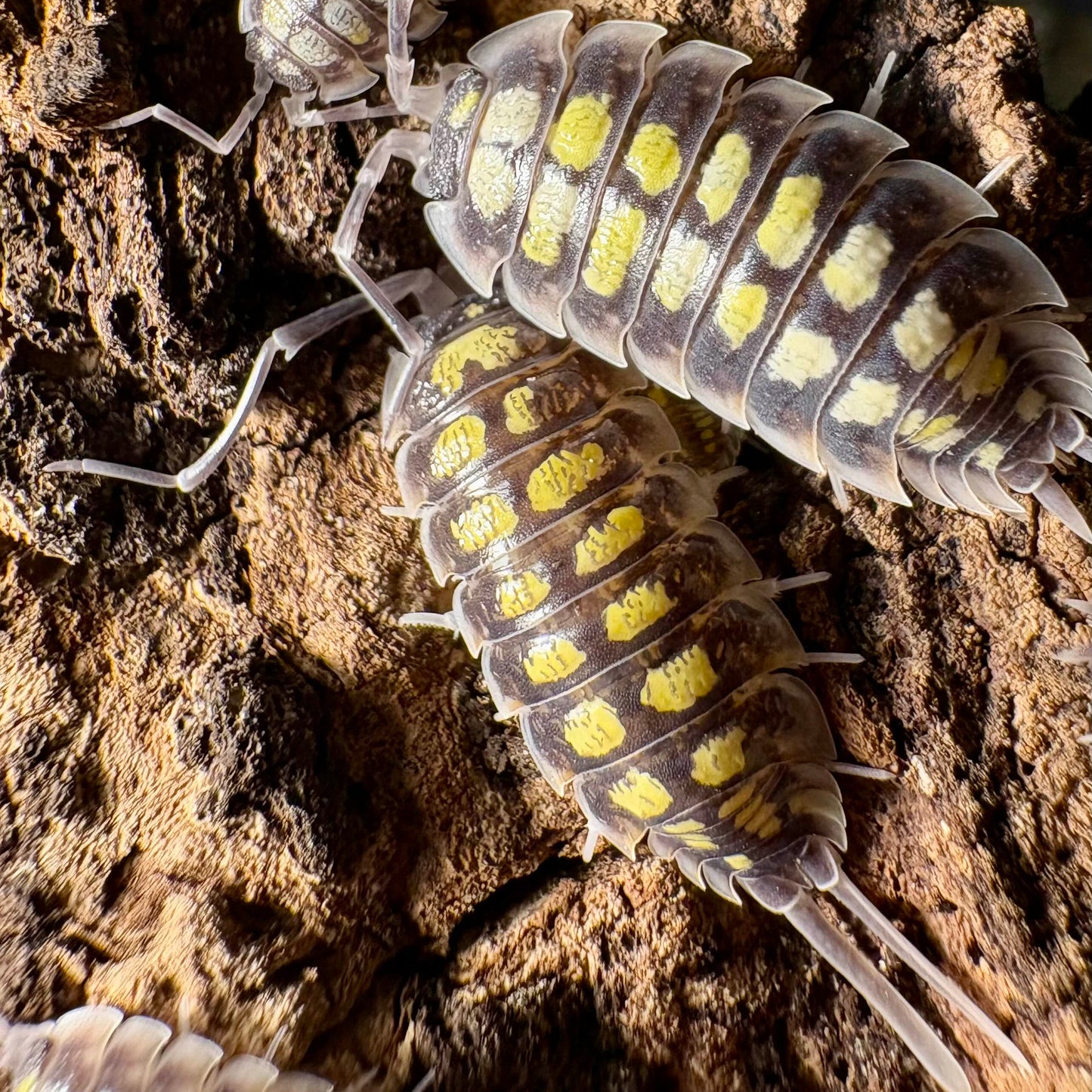
Porcellio haasi "High Yellow"
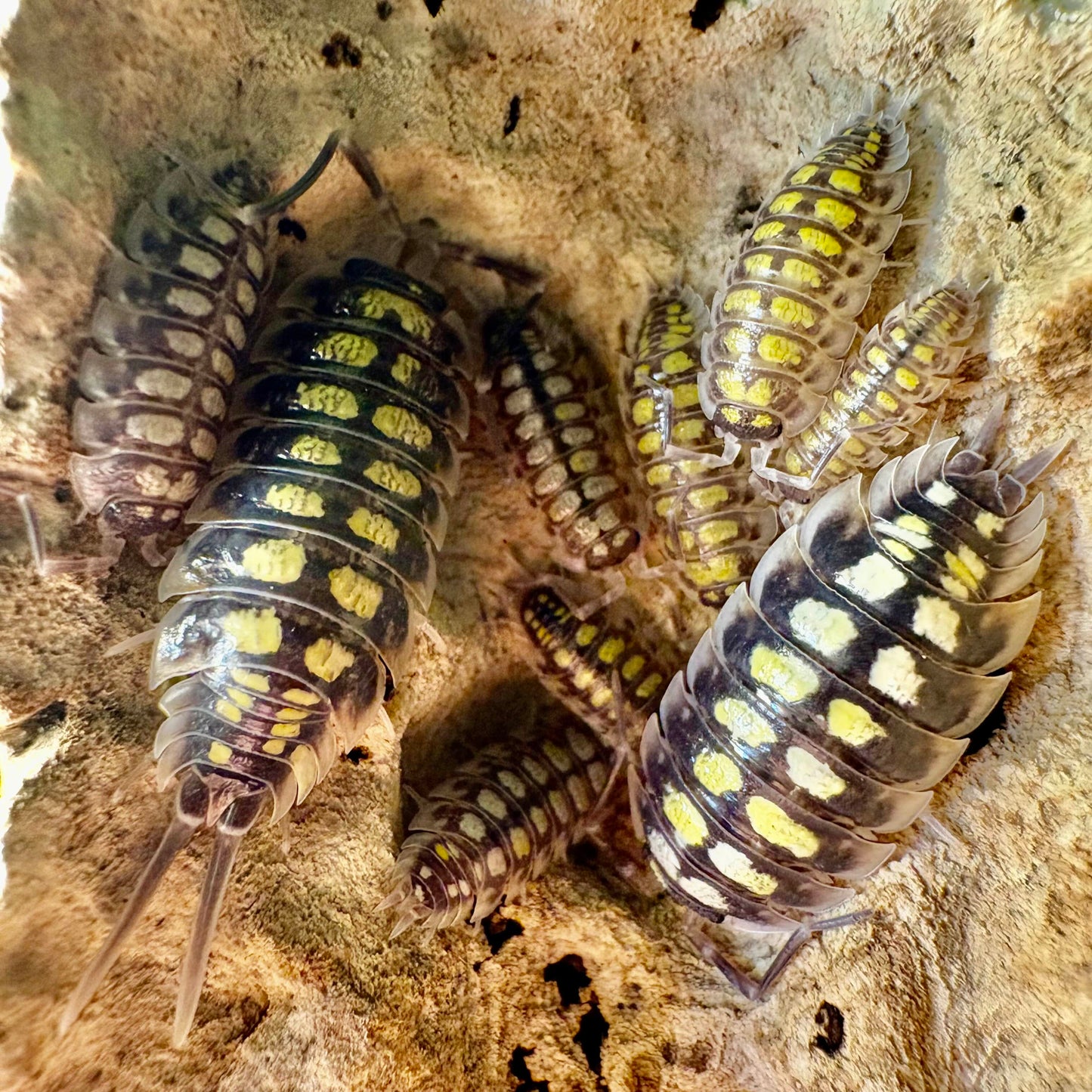
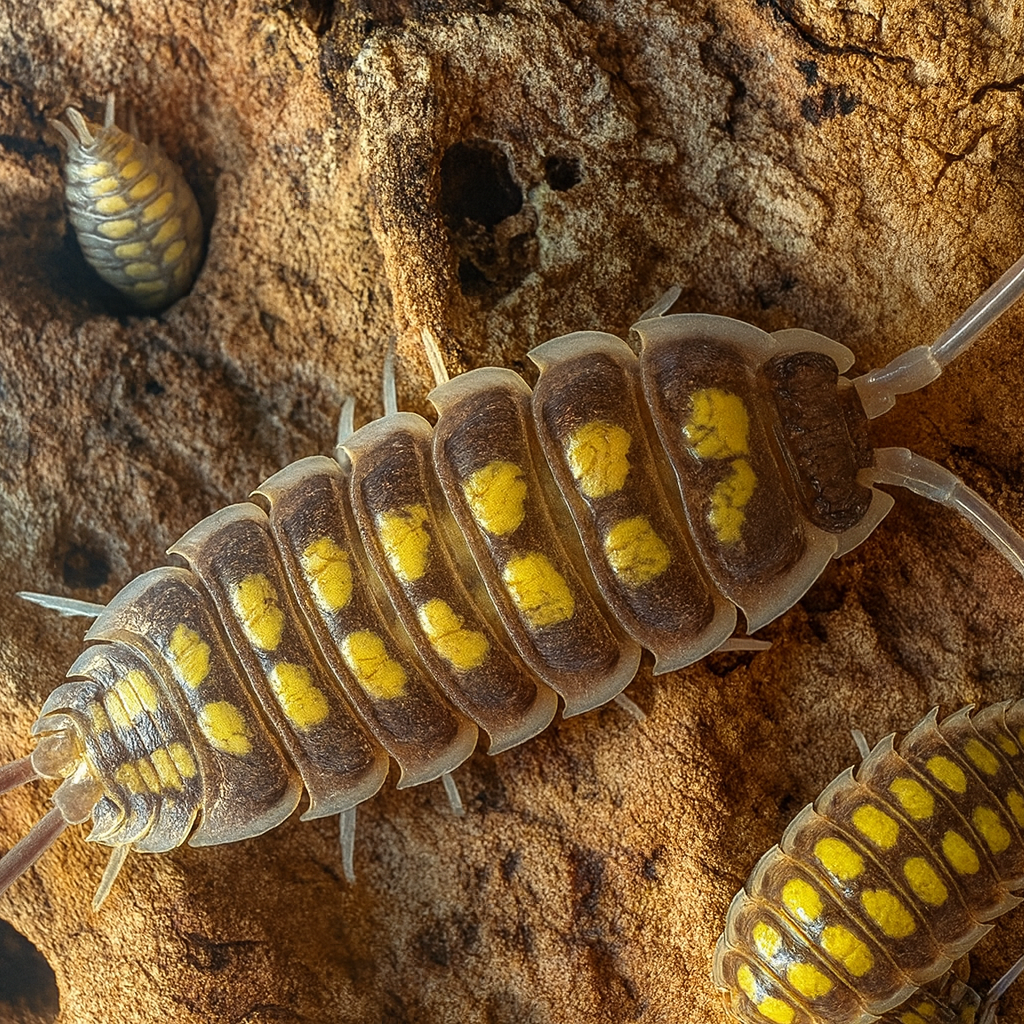
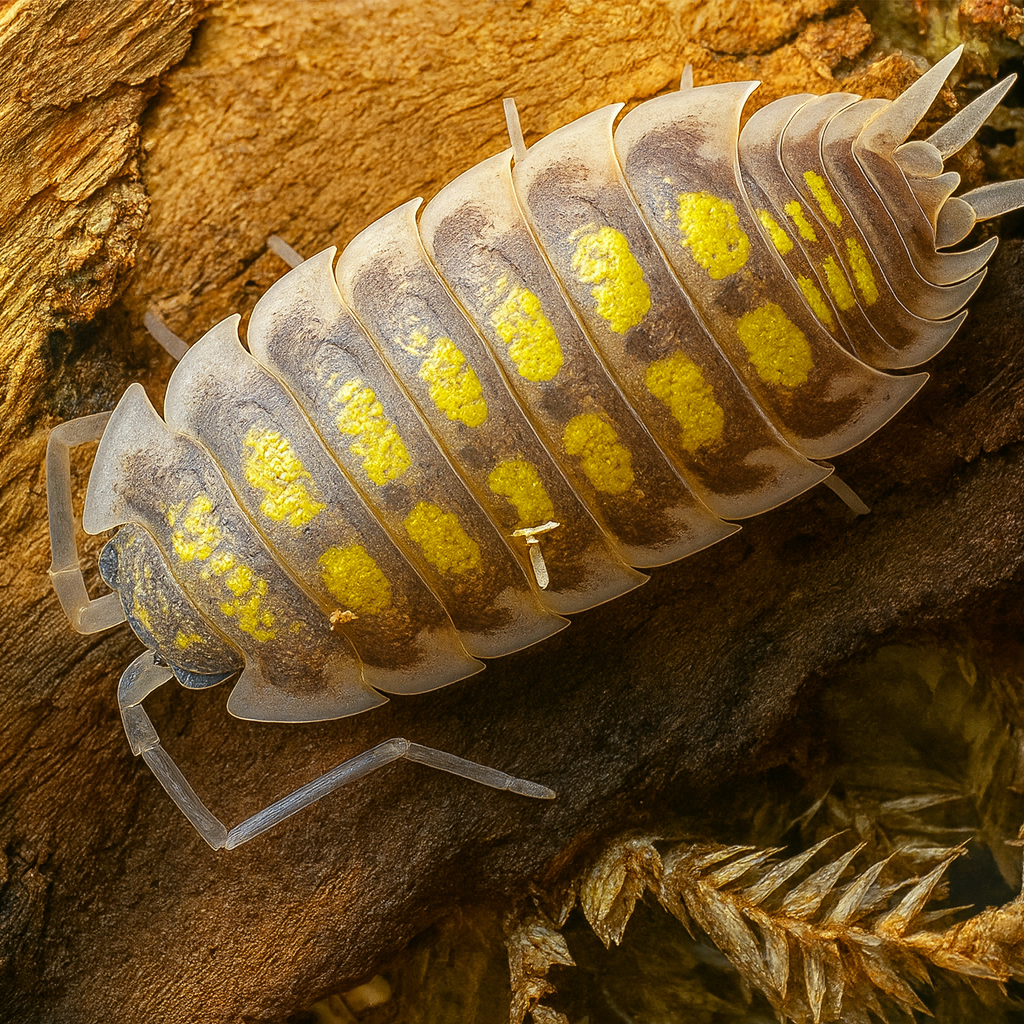
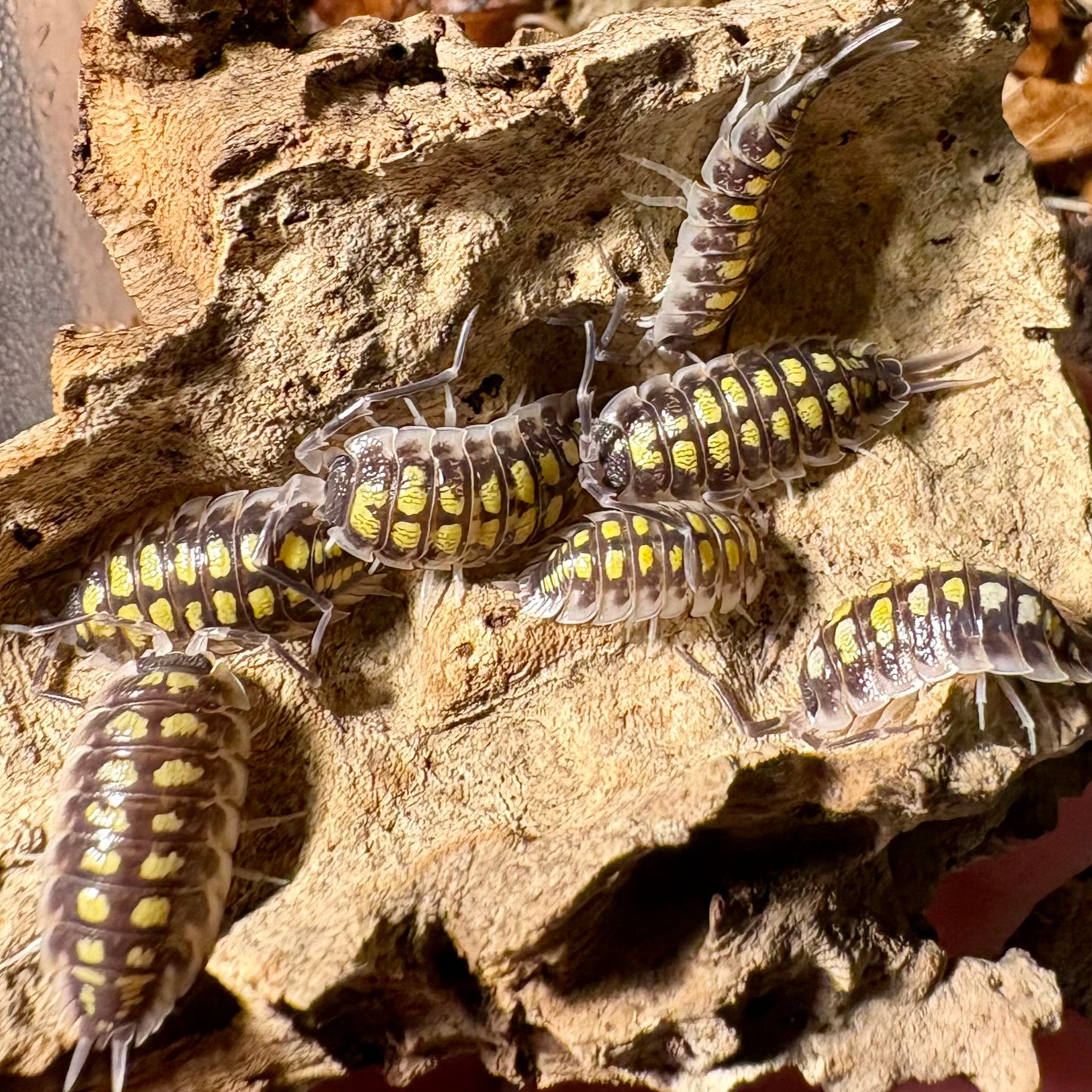
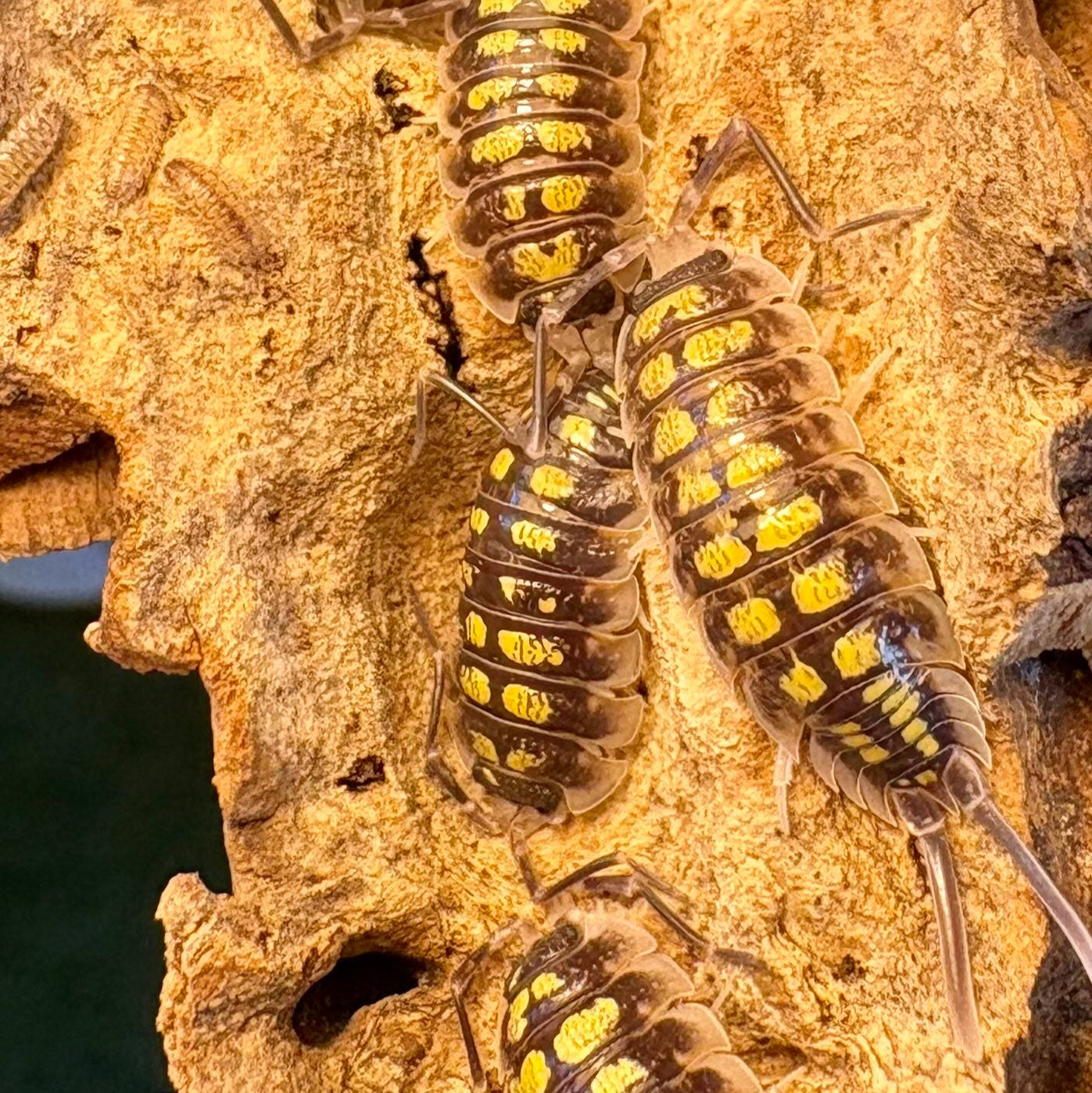
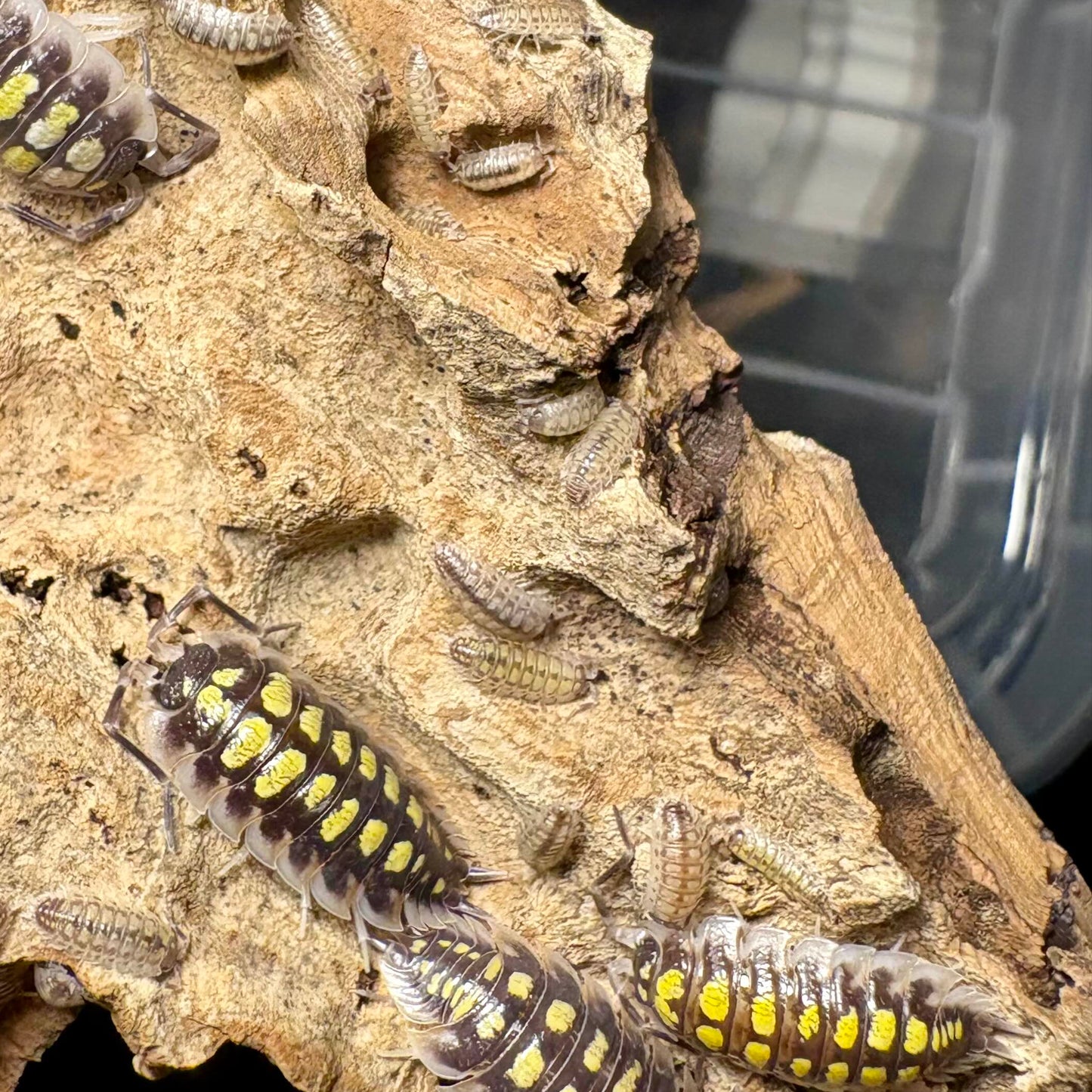
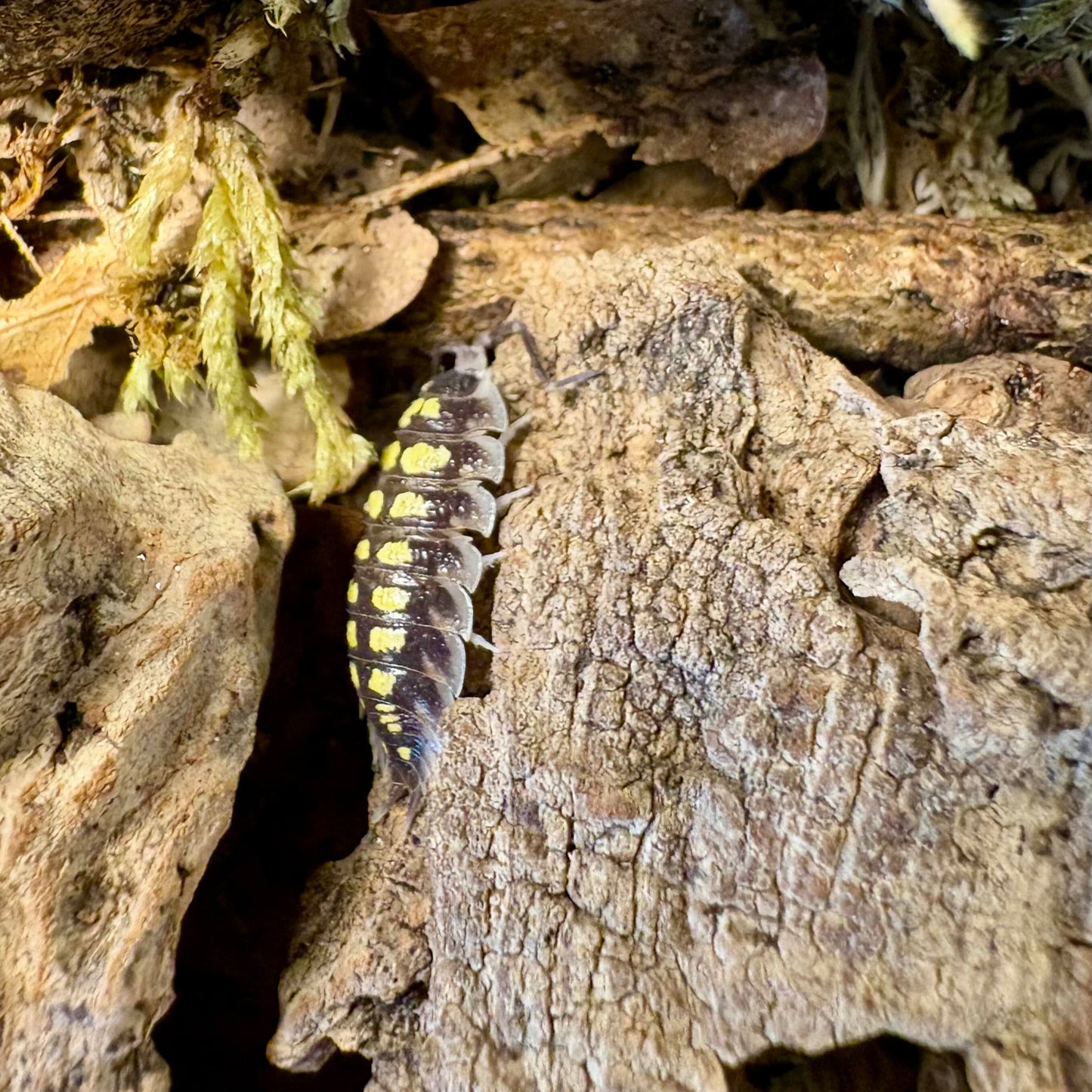
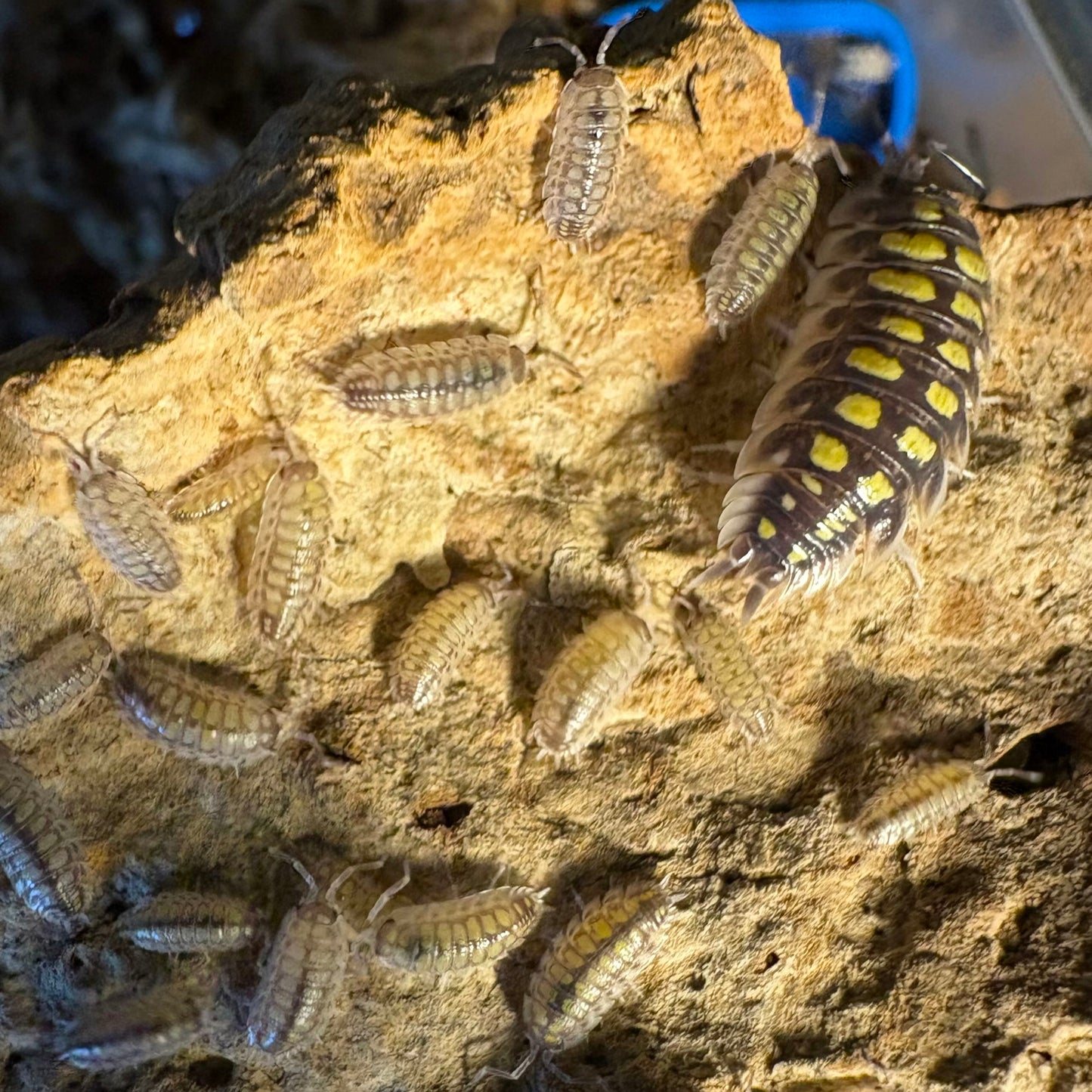
Porcellio haasi “High Yellow” are gorgeous, vibrant, and large isopods. This morph has been selectively bred for its neon-yellow markings, which stand out dramatically against the white and grey skirting of the body. The result is a striking morph that is instantly eye-catching.
This species is sexually dimorphic, with males developing extremely long uropods (the tail-like appendages at the rear of the body).
These isopods are captive-bred (CB).
Care Information
- Size: Mixed sizes.
- Diet: Rotting hardwood, leaf litter (oak, beech, maple, chestnut, Asian species), and lichen form the staple diet. Supplement regularly with calcium (cuttlefish bone, limestone, or powdered calcium carbonate), protein-rich treats (fish flakes, shrimp pellets) and vegetables (squash, carrot, zucchini, or sweet potato).
- Temperature: 20–26 °C. Room temperature is usually fine
- Humidity: 50-60%. Requires moderate humidity. Maintain a moist/dry gradient: 1/4 of the tub humid with moss or damp substrate, the remaining drier. Mist lightly or use a dropper every week to maintain stability without waterlogging.
- Ventilation: Provide good cross-ventilation to prevent stagnation, while keeping humidity stable.
- Substrate: Substrate minimum ~5cm deep mix, organic soil, flake soil, rotting wood, sphagnum moss, and leaf litter. Add cork bark and hardwood pieces for shelter.
- Enclosure: 3L Braplast tub or larger. For growing colonies 5L and 11L tubs may be more suitable.
Isopods are shipped securely in ventilated tubs with damp moss for safe travel.
Note: If you are interested in larger quantities than those listed, or want any advise, please get in contact!
Species Info
 Spain
Spain
 Porcellio haasi
 "High Yellow"
 Mixed sizes
 20 - 26 °C
 50-60%
 High
High
Buy Now
Couldn't load pickup availability
Porcellio haasi "High Yellow"
Porcellio haasi “High Yellow” are gorgeous, vibrant, and large isopods. This morph has been selectively bred for its neon-yellow markings, which stand out dramatically against the white and grey skirting of the body. The result is a striking morph that is instantly eye-catching.
This species is sexually dimorphic, with males developing extremely long uropods (the tail-like appendages at the rear of the body).
These isopods are captive-bred (CB).
Care Information
- Size: Mixed sizes.
- Diet: Rotting hardwood, leaf litter (oak, beech, maple, chestnut, Asian species), and lichen form the staple diet. Supplement regularly with calcium (cuttlefish bone, limestone, or powdered calcium carbonate), protein-rich treats (fish flakes, shrimp pellets) and vegetables (squash, carrot, zucchini, or sweet potato).
- Temperature: 20–26 °C. Room temperature is usually fine
- Humidity: 50-60%. Requires moderate humidity. Maintain a moist/dry gradient: 1/4 of the tub humid with moss or damp substrate, the remaining drier. Mist lightly or use a dropper every week to maintain stability without waterlogging.
- Ventilation: Provide good cross-ventilation to prevent stagnation, while keeping humidity stable.
- Substrate: Substrate minimum ~5cm deep mix, organic soil, flake soil, rotting wood, sphagnum moss, and leaf litter. Add cork bark and hardwood pieces for shelter.
- Enclosure: 3L Braplast tub or larger. For growing colonies 5L and 11L tubs may be more suitable.
Isopods are shipped securely in ventilated tubs with damp moss for safe travel.
Note: If you are interested in larger quantities than those listed, or want any advise, please get in contact!